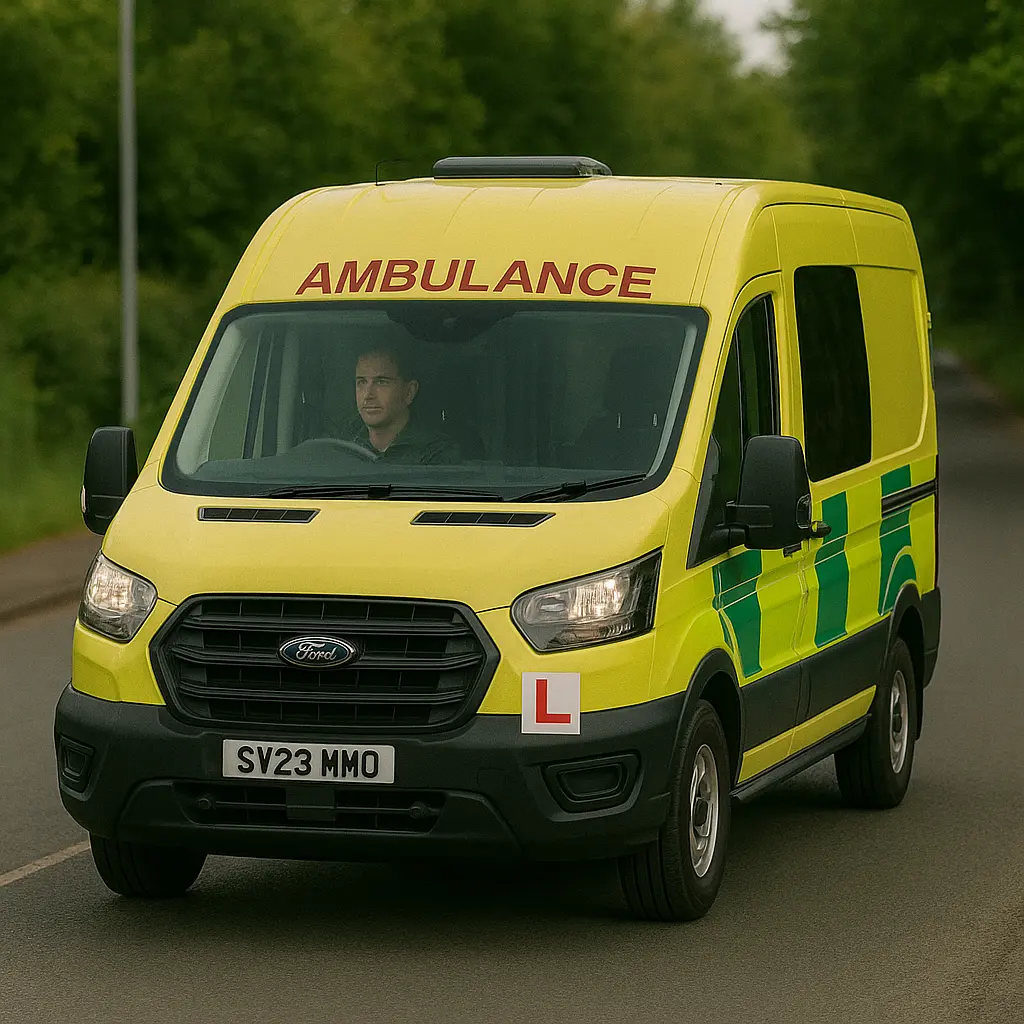

Before you can begin the process of obtaining a C1 licence, you must first hold a current standard car driving licence and be over the age of 18.
If you are not getting paid to drive a C1 vehicle, or have intentions of working for the ambulance service, you do not need the Continual Professional Competence (CPC) Card (sometimes called the Driver Qualification Card (DQC)
What is a 'C1' Vehicle?
A C1 vehicle is a classification in the UK (including Northern Ireland) for a medium-sized goods vehicle (MV) that meets specific weight criteria. It allows you to drive vehicles that are bigger than a normal car but smaller than a full lorry.
A C1 vehicle is:
A rigid vehicle (truck/van)
Maximum Authorised Mass (MAM) of 3,500 kg to 7,500 kg (i.e., 3.5 – 7.5 tonnes)
With no more than 8 passenger seats
You may also tow a trailer up to 750 kg with a C1 licence.
Examples of C1 Vehicles include:
Larger box vans used for commercial deliveries
Small rigid trucks used in trades or logistics
Some ambulances & specialist vehicles falling in that weight band
Vehicles too large for a standard car licence but not as large as a full HGV (Category C)
Who needs a C1 Licence
You need a C1 driving licence if you want to legally drive vehicles in that weight range on UK roads — often required for certain jobs (e.g., driving delivery trucks, support vehicles, ambulances)
CPC vs DQC
CPC (Certificate of Professional Competence)
DQC (Driver Qualification Card)
You cannot have a DQC without CPC, and you do NOT need a Driver CPC or DQC if:
The Job role is exempt from EU/UK drivers’ hours rules (Ambulance Services are)
You are driving as part of Social, Domestic or Pleasure (i.e. not getting paid)
Title vs DQC
CPC (Certificate of Professional Competence) = the qualification
DQC (Driver Qualification Card) = the card issued once CPC is achieved
You cannot have a DQC without CPC, and you do NOT need a Driver CPC or DQC if:
The Job role is exempt from EU/UK drivers’ hours rules (Ambulance Services are)
You are driving as part of Social, Domestic or Pleasure (i.e. not getting paid)